How a 5 Member Team Built Autosocializer in Just 6 Months
Inside the real world execution of a complex workflow automation platform without VC money, bloated teams, or unnecessary tools complexity.
1. Building a Product Most Teams Avoid
When we started building Autosocializer, we were told the same thing repeatedly:
“This is too big for a small team.”
“Split it into multiple products.”
“Use existing tools and stitch them together.”
We ignored it all.
Why? Because the problem wasn’t missing tools:
It was having too many of them.
Teams were juggling chat apps, workflow boards, automation tools, email integrations, and third-party plugins just to get basic work done. Context switching was killing productivity.
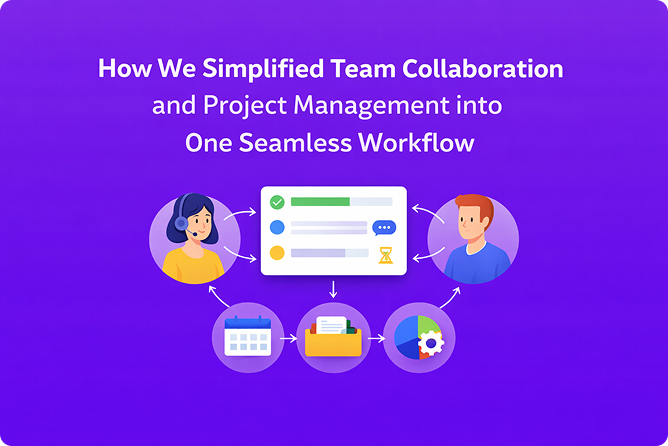
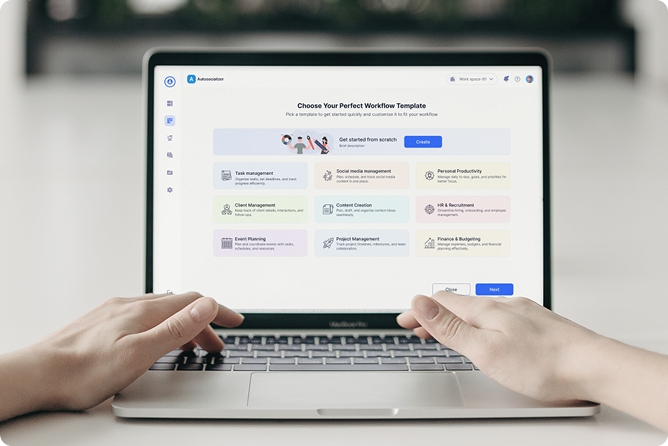
Autosocializer was built to solve that: one platform, one workflow, one source of truth.
And we did it with 5 people, 6 months, and zero shortcuts.
2. The Team Behind the Build
This wasn’t a bloated startup or outsourced operation.
Just 5 full-time builders:
-
2 Founders
- Backend architecture & system design
- Product direction and execution decisions
-
Frontend Engineer
- React-based micro-frontend architecture
-
UI/UX Designer
- Design system, usability, onboarding flows
-
QA Engineer
- End-to-end testing, edge cases, workflow validation
No part-time work.
No “we’ll fix it later” mindset.
3. Timeline: What 6 Months Really Looked Like
Months 1–2: Idea, Validation & Brutal Scoping
We didn’t rush to code.
- Studied how teams actually work (not just how tools claim they work)
- Identified the real pain: tool fragmentation
- Defined a dangerous but clear scope:
- Chat
- Workflow boards
- Automation
- Real-time communication
- Third-party integrations (starting with Gmail)
Yes, it was ambitious. That was the point.
Months 3–6: Design, Build, Break, Repeat
Design, development, testing, and launch didn’t happen in neat phases—they overlapped constantly.
Tech Stack
- Frontend: React (Micro-frontend architecture)
- Backend: Node.js
- API: GraphQL
- Database: MongoDB
- Infrastructure: AWS
- Caching & Queues: Redis
Every architectural decision was made with scalability and customization, in mind. not demo day visuals.
4. The Hard Parts (No Marketing Spin)
1. Automation Engine From Scratch
We didn’t use existing automation engines.
We built our own logic, triggers, actions, conditions, and everything.
That alone could have been a product
2. Tight Budget, Real Pressure
Autosocializer is our own product.
This meant:
- Client projects paid the bills
- Product work happened alongside delivery work
- Context switching wasn’t theoretical -it was a daily reality
Balancing cash flow and product vision was one of the hardest challenges.
3. Feature Overload (By Design)
Chat + Workflow + Automation + in one platform is not “safe.”
But splitting features into separate tools would defeat the purpose.
So we engineered flexibility without chaos.
5. What Makes Autosocializer Different
Most platforms solve one problem and ask you to integrate the rest.
Autosocializer does the opposite.
Instead of:
- Chat tool + workflow tool + automation tool
- Paid plugins
- Vendor lock-in
- Broken context
You get:
- Unified chat, boards, and automation
- Custom workflows per team
- Built-in automation without third-party dependencies
- Fewer tools, fewer tabs, fewer mistakes
It’s not another tool. It’s an exit from tool chaos.
6. Real Usage. Real Results.
Autosocializer isn’t a “coming soon” product.
Current Usage
- Used daily by 4 global teams, including Xtellig
- 3 external client teams actively using it
Internal Impact
- The entire development, marketing, and hiring workflow runs on Autosocializer
- Hiring automation:
- Application forms
- Automated email responses
- CV filtering
- 1000+ emails automated
- Eliminated Slack, GitHub Projects, monday.com
Measurable Gains
- 70% reduction in context switching
- 40% faster team coordination
- 30% of repetitive tasks automated
These aren’t projections. They’re live results.
7. Why This Matters for Clients
If a 5-member team can:
- Architect a scalable platform
- Build a custom automation engine
- Balance client delivery and product development
- Launch and run it in real environments
Then building your product is not a risk- it’s execution.
That’s what Xtellig brings:
- Systems thinking
- Product discipline
- Real-world delivery experience
8. Final Thought
Autosocializer exists because we refuse to build something easy.
We are not just another development team.
“We build what others avoid.”
If that’s how you want your product built, Let’s talk